When people think about Québec cuisine, what usually comes to mind is hot poutine, maple syrup flowing freely, and large, welcoming tables. All of that is true. But it’s far from the whole story.
In Québec, food goes beyond recipes. It comes from a vast land, often covered in forest, shaped by the seasons and a deep connection to nature. Here, eating is often a natural extension of walking through the woods, foraging, and respecting what the land provides.
That is the kind of cuisine we want to highlight at Québec Authentique. A cuisine that truly goes from forest to table.
In this article, you will discover the major culinary specialties of Québec, along with those that are mostly known by locals and foragers.
Traditional Québec Culinary Specialties
1. Poutine
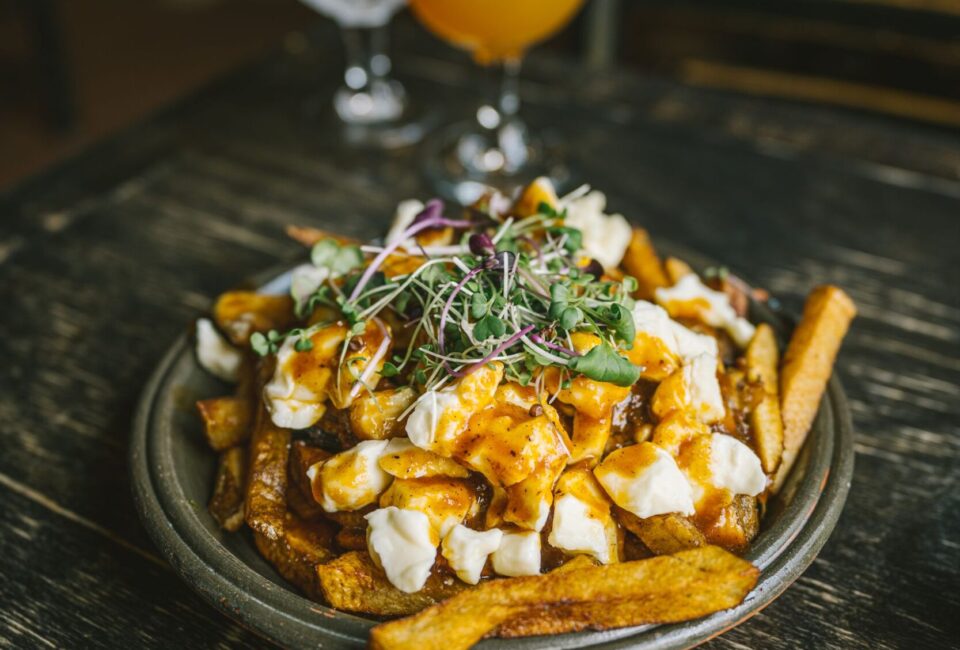
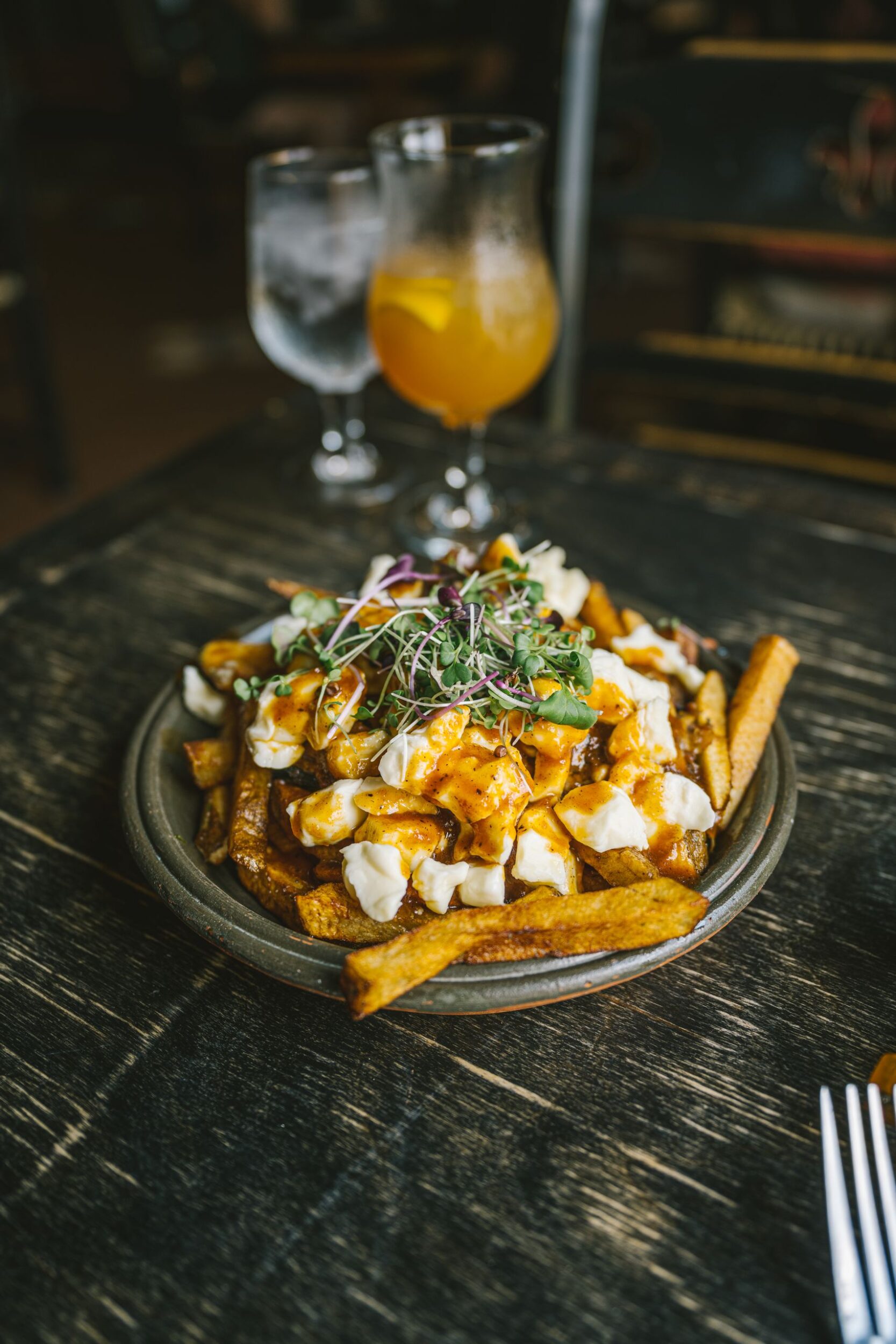
Poutine is without a doubt the most well-known Québec dish internationally. Created in Québec in the late 1950s, it is made of three simple but inseparable elements: fries, fresh cheese curds, and hot brown gravy. One important detail: the cheese curds must be fresh enough to “squeak” when you bite into them, a quality that people here really look for. And if you are traveling with kids, it is also the kind of reliable dish everyone agrees on.
Originally, poutine was a rural snack bar dish, associated with small village roadside diners. It was designed to be filling, quick, and comforting. Over time, it has evolved and been refined, but the classic version remains a strong symbol of Québec’s everyday cuisine.
2. Tourtière
Tourtière is one of those dishes people naturally associate with large family gatherings, especially during the holiday season. Depending on the region and the household, recipes vary. In many families, it is made with ground pork, beef, or veal, gently seasoned with spices like cinnamon and clove.
In other parts of Québec, particularly in the Saguenay–Lac-Saint-Jean region, tourtière is a much heartier dish, made with cubed meat and potatoes, slow-cooked for hours.
No matter the version, it reflects a traditional cuisine designed to feed everyone, especially when winter fully sets in.
3. Pâté chinois
Pâté chinois is a classic weeknight meal in Québec. Three layers, no more, no less: ground beef, corn, and mashed potatoes. Simple, affordable, and filling, it is a dish almost everyone grew up eating.
The origin of its name is not fully confirmed, but the most widely accepted explanation links it to Chinese workers who worked on railroads in North America in the late 19th century, especially in the United States. They were served inexpensive meals made with meat, corn, and potatoes. French Canadian workers are believed to have brought the recipe and its name back to Québec, adapting it along the way.
4. Baked beans
Baked beans are part of a long-simmered tradition, especially in rural areas and logging camps. They are made with white beans slowly cooked with salted pork, sometimes bacon, and often a touch of molasses or maple syrup.
It was an affordable and nourishing meal, ideal for long workdays. Today, it is still closely associated with traditional brunches, sugar shacks, and simple meals that bring people together.
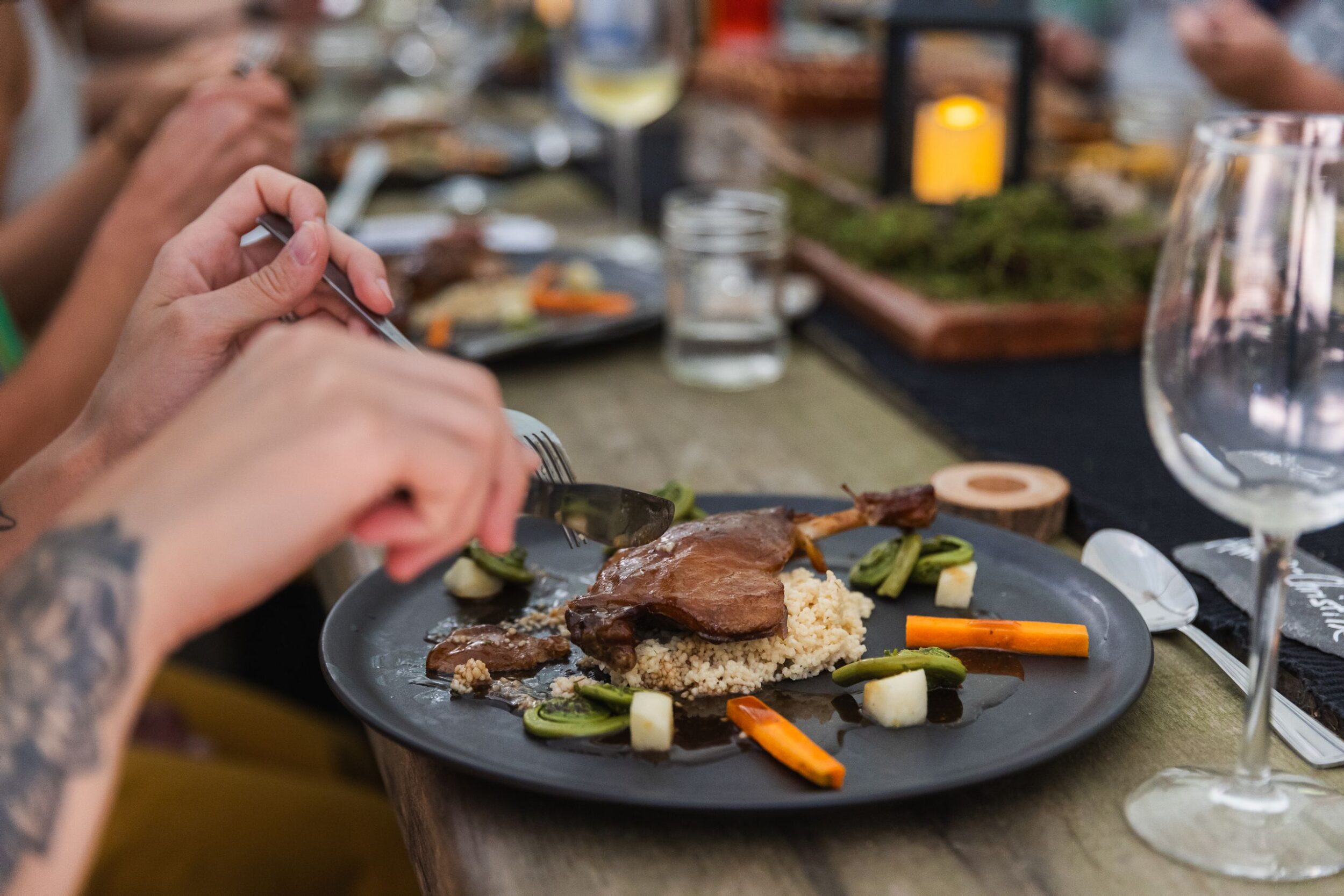
5. Game and fish
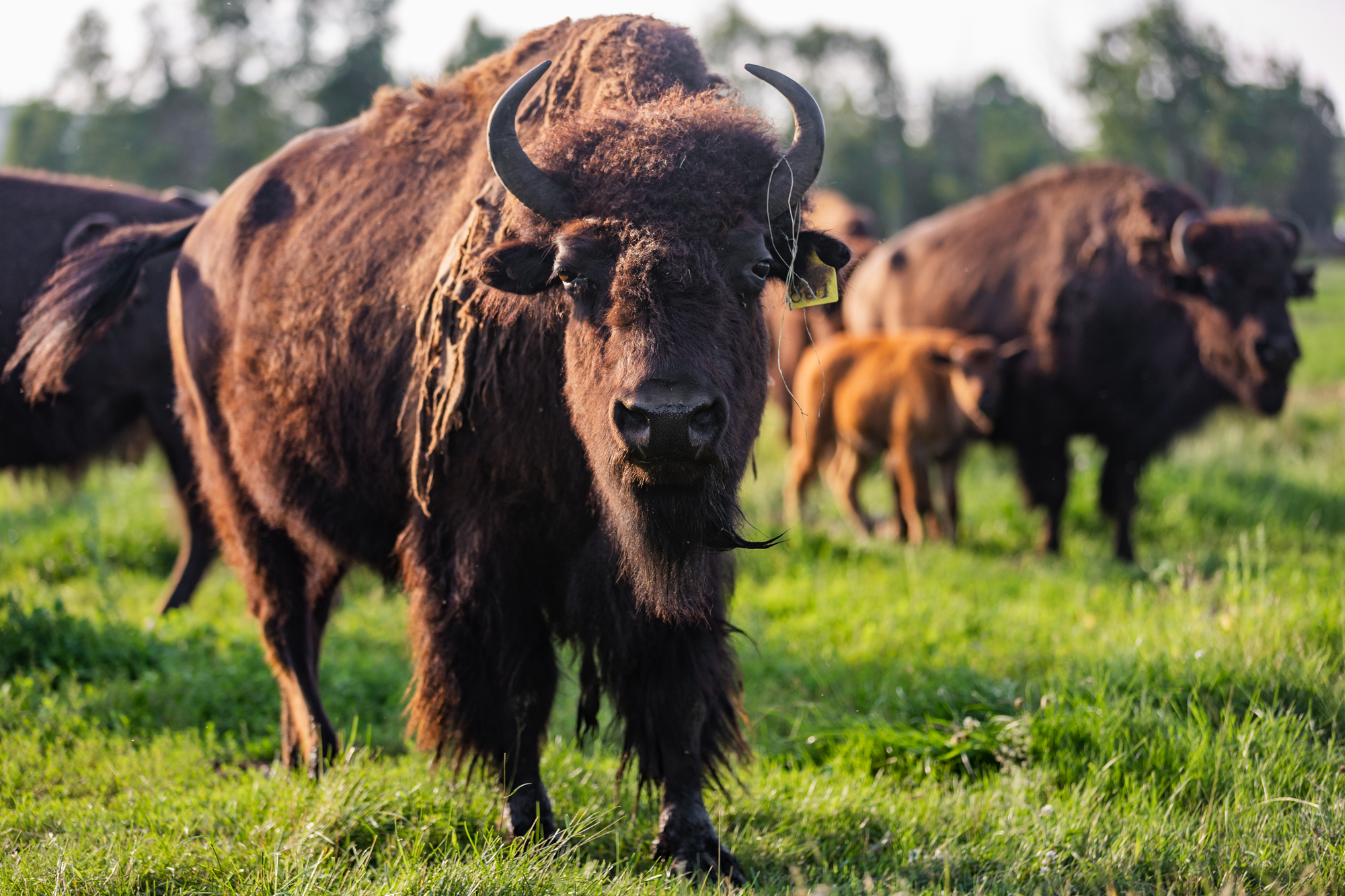
Hunting and fishing play an important role in Québec’s food culture, especially outside major cities. Historically, they were essential for survival.
Even today, many families fill their freezers with fish caught in spring and game hunted in the fall.
This connection to nature follows a seasonal rhythm. Many people take time off specifically for fishing trips or hunting season. These moments are just as social as they are about food, and they still shape the calendar for many rural families.
6. Corn
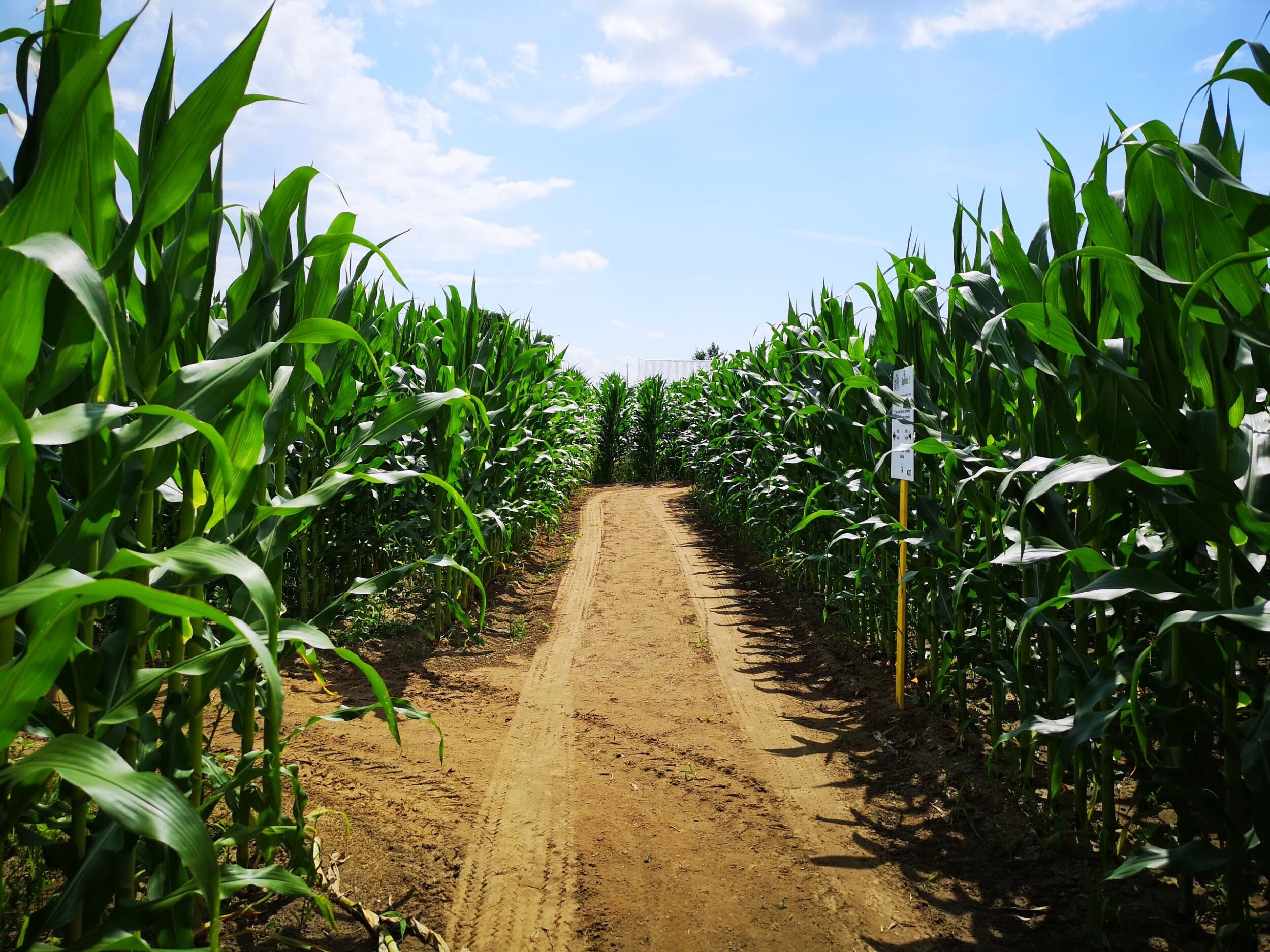
Corn is deeply rooted in Québec’s food culture. You will find it in dishes like pâté chinois, but especially in a late-summer tradition that locals love: the corn husking gathering.
Here, corn is called “blé d’Inde,” a term inherited from early explorers.
In August, during harvest season, people gather outdoors to husk corn together and cook it in large pots over a fire. It is eaten simply with butter and salt, around long outdoor tables.
7. Maple syrup
Maple syrup is more than just a product in Québec. The province is by far the world’s largest producer, and every spring, the sugaring season marks the beginning of a highly anticipated time of year.
Sap collection, sugar shacks, traditional meals, and maple taffy on snow are all part of the experience. Maple syrup is used in both sweet and savory dishes and is deeply tied to Québec’s culinary identity.
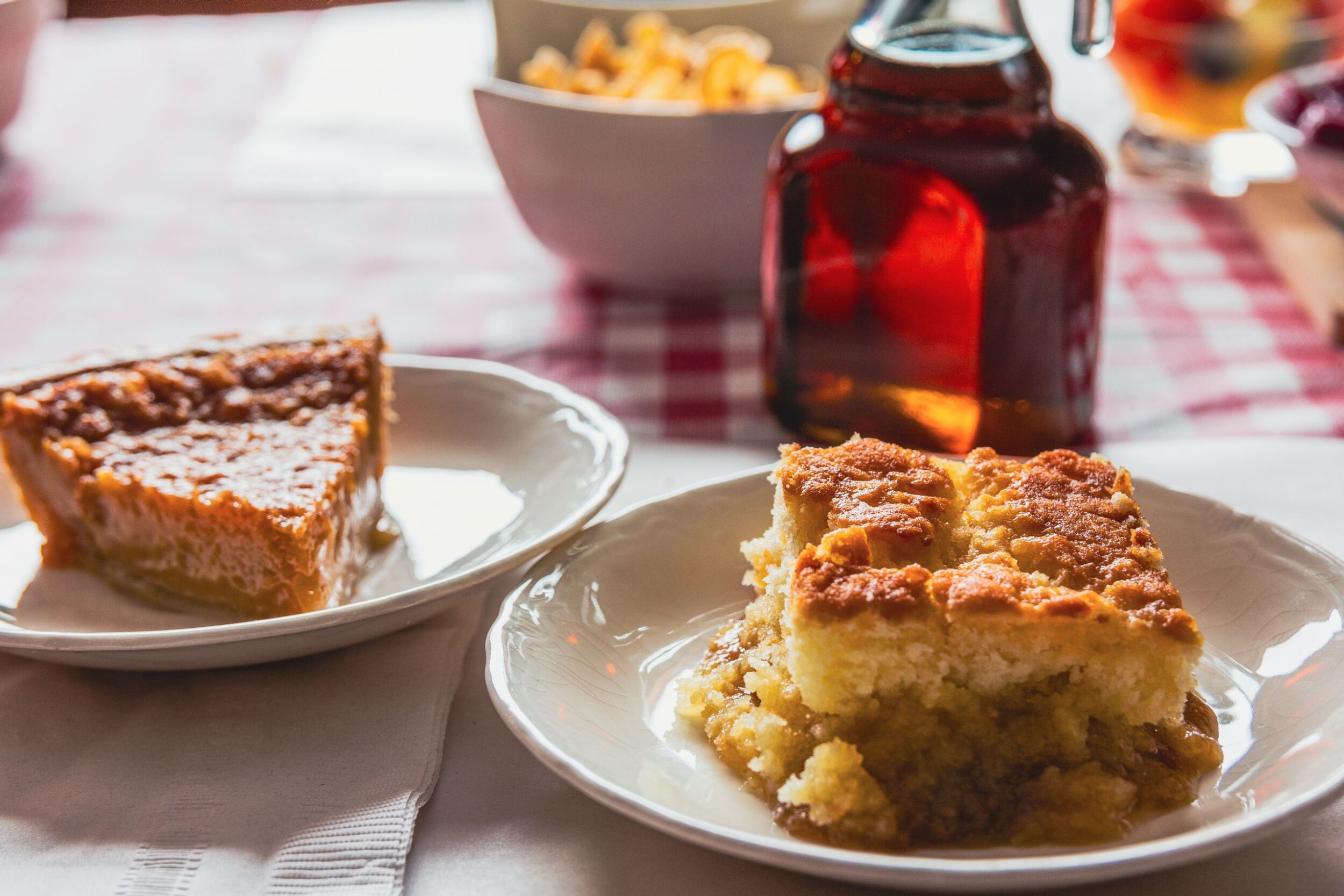
8. Poor man’s pudding
Poor man’s pudding is a dessert that dates back to the Great Depression of the 1930s. It is made from a simple cake batter over which hot syrup is poured before baking, traditionally made with brown sugar or maple syrup.
Its name reflects the economic context of the time. It is a modest yet comforting dessert that is still widely enjoyed today.
9. Sugar pie
Sugar pie is a classic Québec dessert. It is made with brown sugar or maple syrup mixed with cream or milk, then poured into a pie crust.
Often served during family meals and the sugaring season, it represents the simplicity and indulgence of traditional cuisine. Its richness and sweetness make it strongly associated with childhood memories and shared meals.
Québec Culinary Specialties: New Trends
In recent years, a new culinary wave has emerged in Québec. It does not replace traditional cuisine, it builds on it.
You still find the same foundations such as territory, seasons, and generosity, but with a deeper focus on wild ingredients, boreal products, and distinctive flavors.
In other words, it is no longer just about “eating Québec food,” but about truly tasting Québec, almost in a geographic sense.
Wild mushrooms
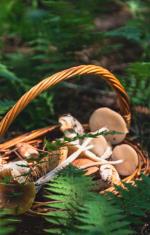
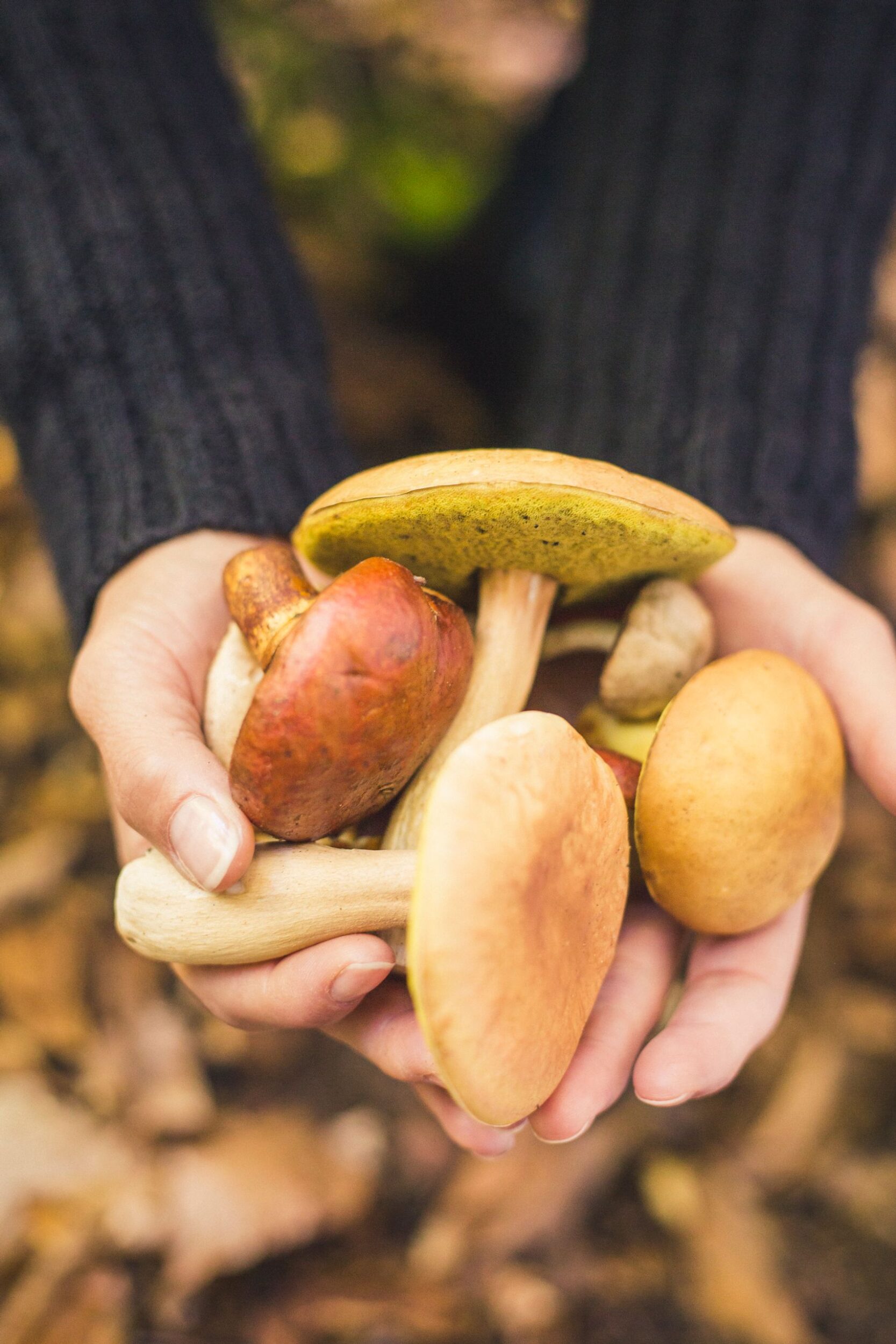
Wild mushrooms are taking on a bigger role, both among chefs and foraging enthusiasts.
Classic varieties like chanterelles, porcini, and morels are well known, but lobster mushroom draws particular attention. Its bright color and unique aroma make it immediately recognizable and memorable on a plate.
In the spirit of “forest to plate,” mushrooms become more than an ingredient. They become an experience, reminding you that the forest is not just a backdrop, but a living pantry shaped by seasons.
Wild berries
Québec’s wild berries have always been part of local cuisine, but they are now being used in more creative ways.
Wild blueberries remain a reference, with a more intense flavor than cultivated ones.
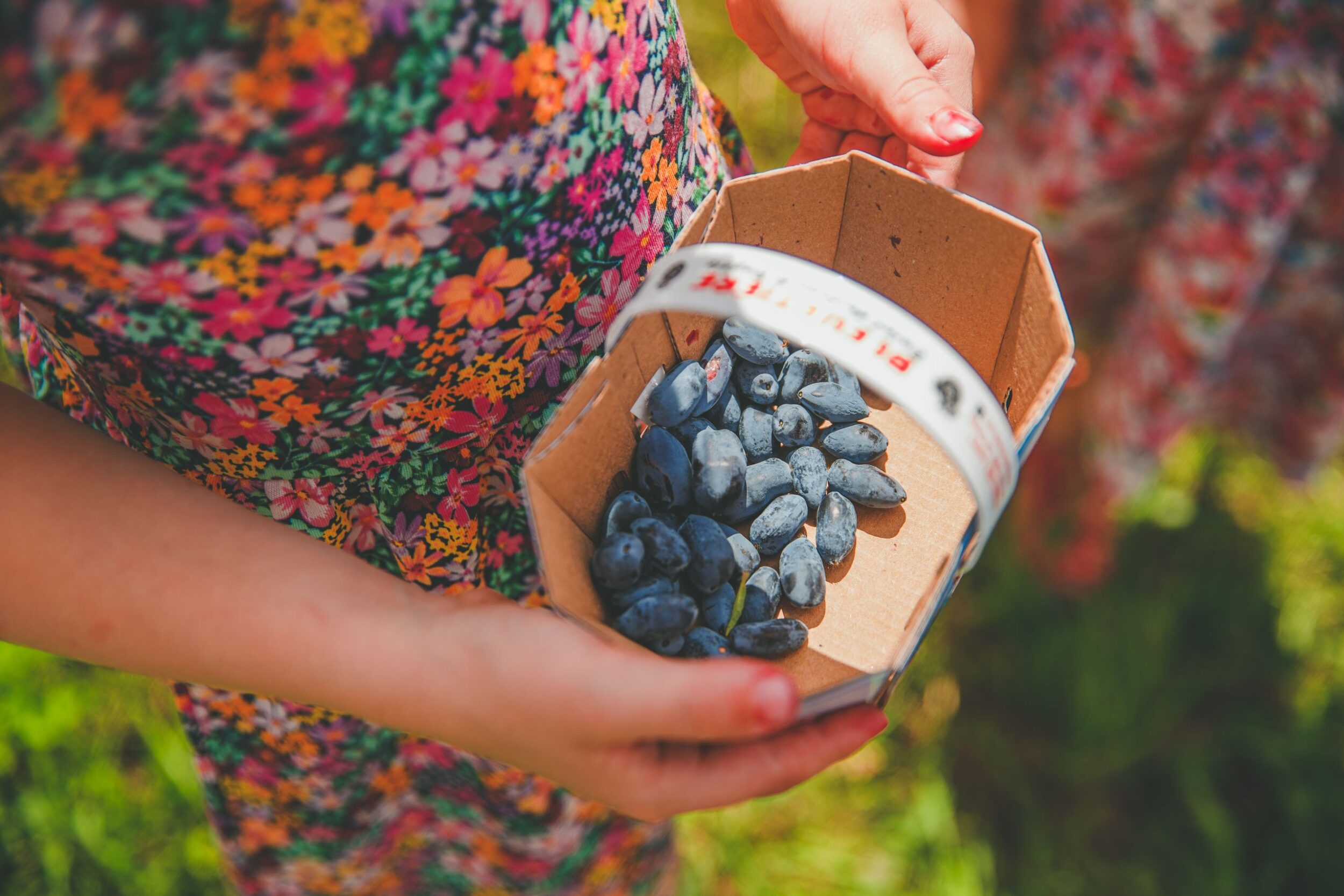
Haskap berries stand out with their balance of fruitiness and slight tannins, working well in both desserts and sauces.
Aronia is increasingly used in processed products for its bold character, while anise hyssop adds a subtle aromatic touch to both sweets and beverages.
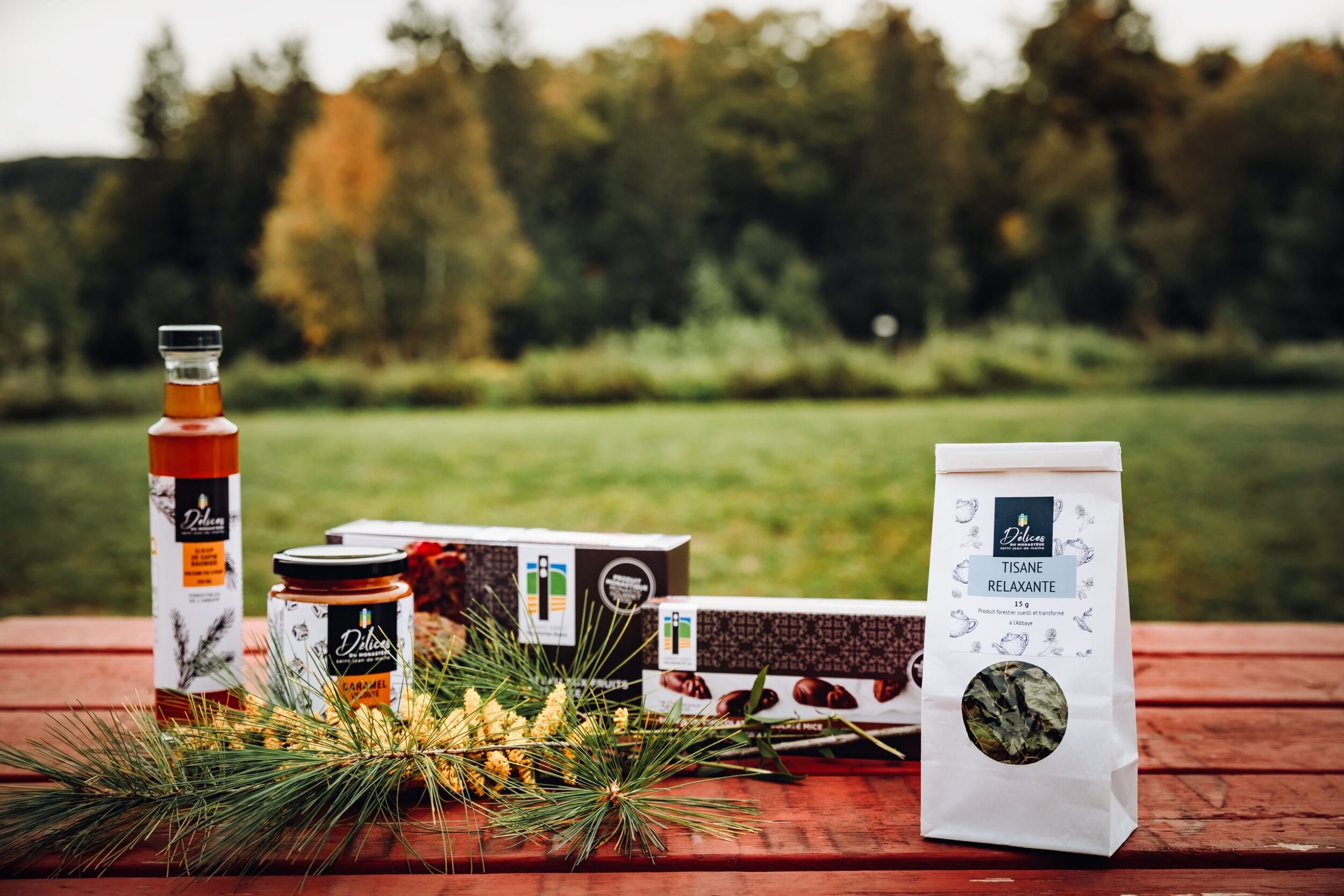
And if you want a concrete example of how these flavors move from the forest to something you can take home, some places turn them into high-end treats. At the Abbaye store in Saint-Jean-de-Matha, you will find refined chocolates inspired by boreal berries. It is exactly the kind of meaningful Québec souvenir you can bring back home.
Boreal spices and forest plants
Boreal spices have a unique quality. They give you the impression of tasting something real and deeply rooted.
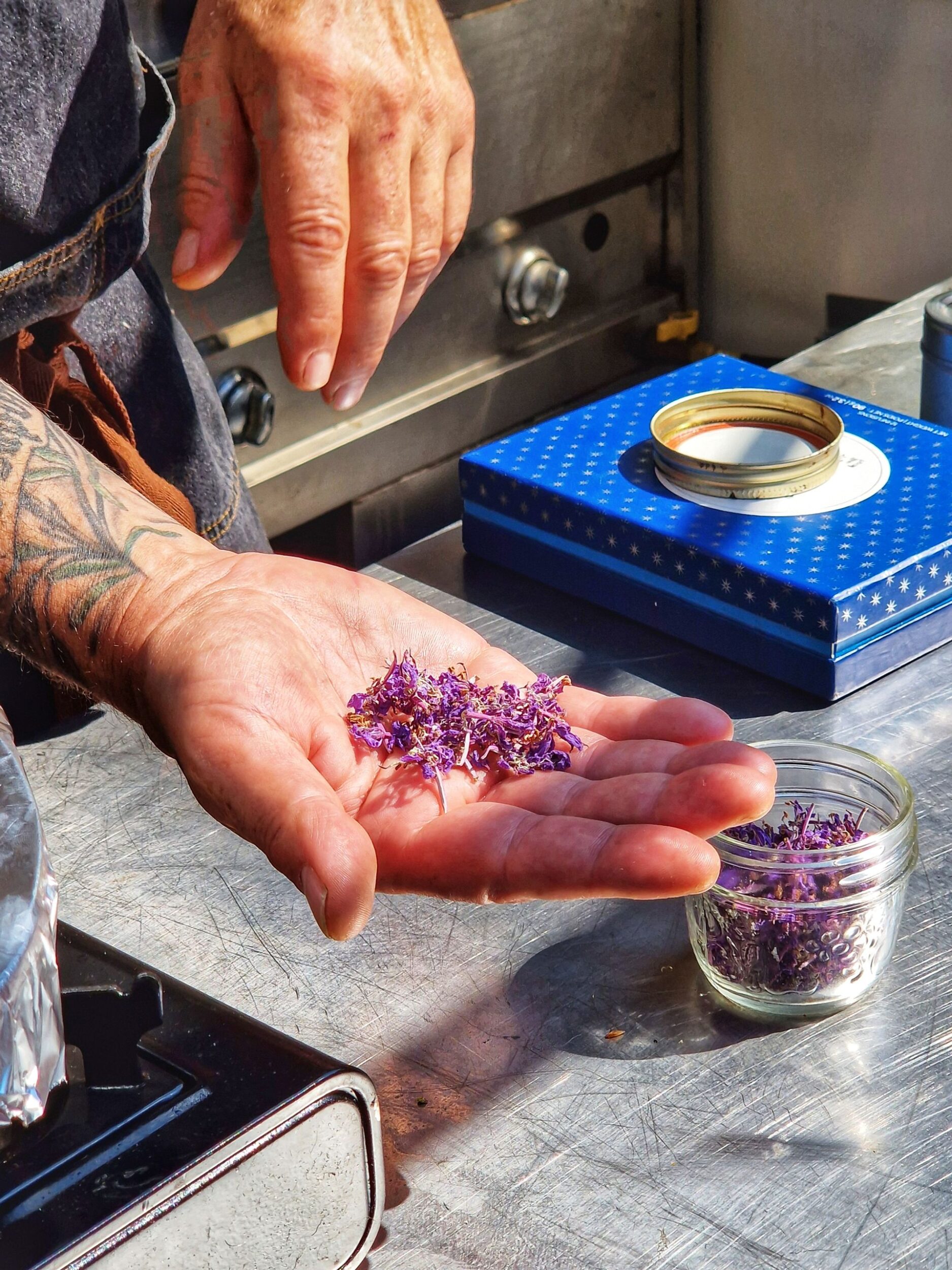
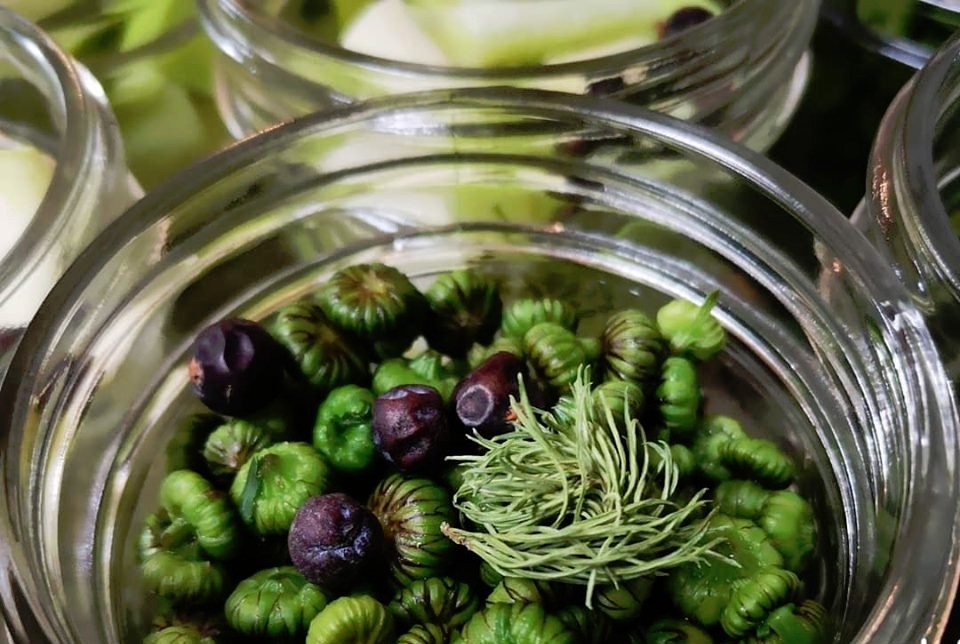
Dune pepper brings an aromatic warmth with a distinctly northern character. Sweet gale offers resinous and balsamic notes that pair surprisingly well with savory dishes, marinades, and even desserts when used carefully. Fir needles add a fresh, woody touch when used in moderation.
Among forest plants, wintergreen stands out with its fresh, slightly minty profile that immediately evokes the forest. Labrador tea is also deeply rooted in boreal traditions and can be enjoyed as an infusion, syrup, or aromatic note in desserts and drinks.
These ingredients are not just about flavor. They tell a story. They reflect identity. They invite you to understand a flavor before tasting it, and to experience the land without altering it.
Where can you experience these flavors?
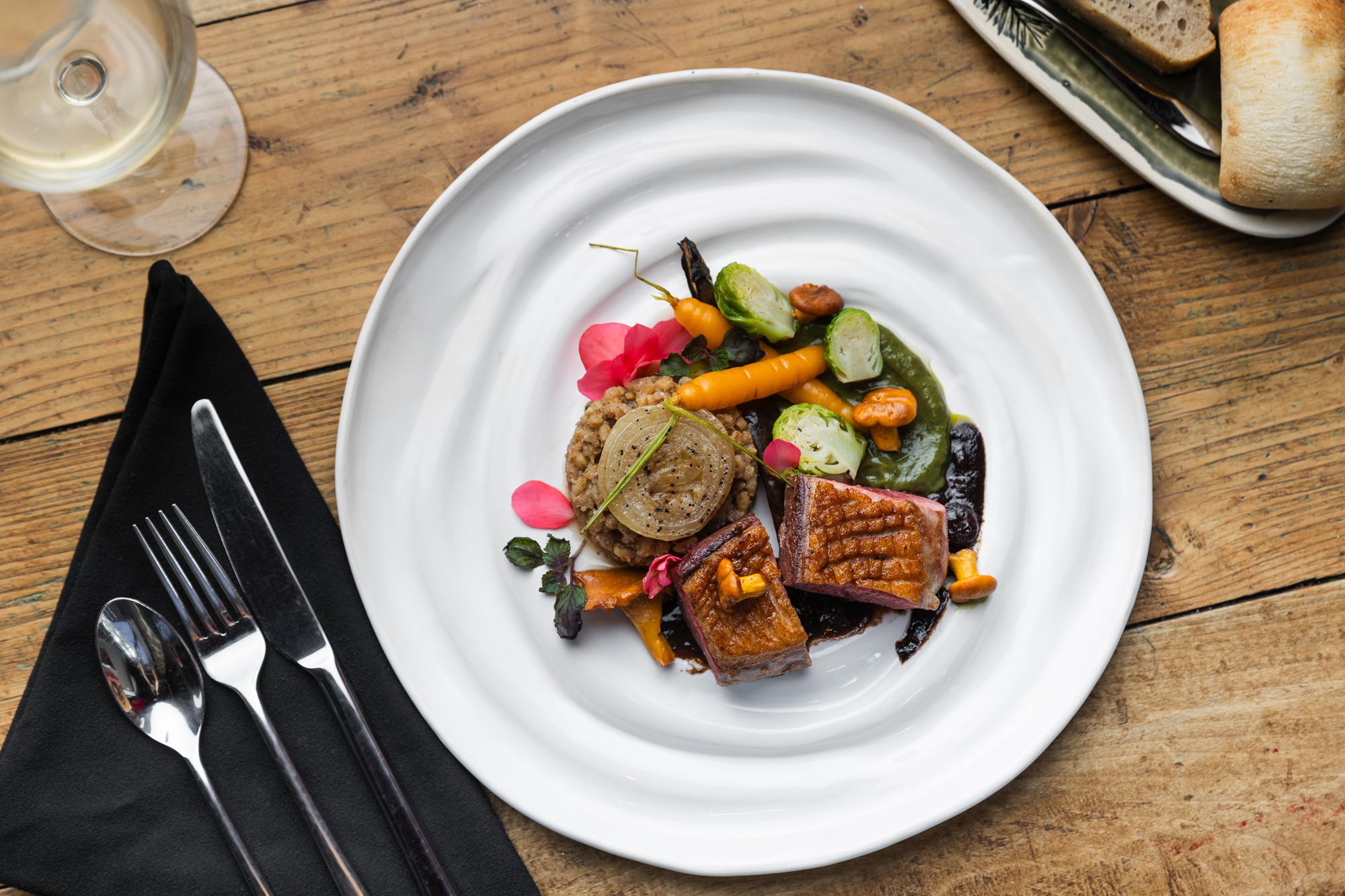
The good news is that these flavors are no longer reserved for insiders. They are increasingly found in menus that highlight local, seasonal, and boreal ingredients, especially in some microbreweries that create thoughtful pairings.
Microbrasserie Le Presbytère is a great example. People come as much for the atmosphere as for the locally inspired menu, paired with beers brewed on site.
FAQ – Québec Culinary Specialties
What is the most popular specialty in Québec?
Poutine, without hesitation. You will find it everywhere, from small roadside diners to more upscale restaurants offering creative versions.
What do you typically find in Québec restaurants?
Outside major cities, you will commonly find poutine, pizza, spaghetti, and burgers. Tourtière and pâté chinois are rarely served in restaurants, as they are mostly home-cooked dishes.
What is Montréal’s signature dish?
Smoked meat is the top classic. It is usually served as a warm sandwich and is a key part of the city’s culinary identity. Montréal is also known for its bagels, which are smaller, denser, slightly sweet, and baked in wood-fired ovens.
What do people eat at Christmas in Canada?
Turkey is common across Canada. In Québec, tourtière and meat pie are also widely served during the holiday season.
What should you try on your first trip?
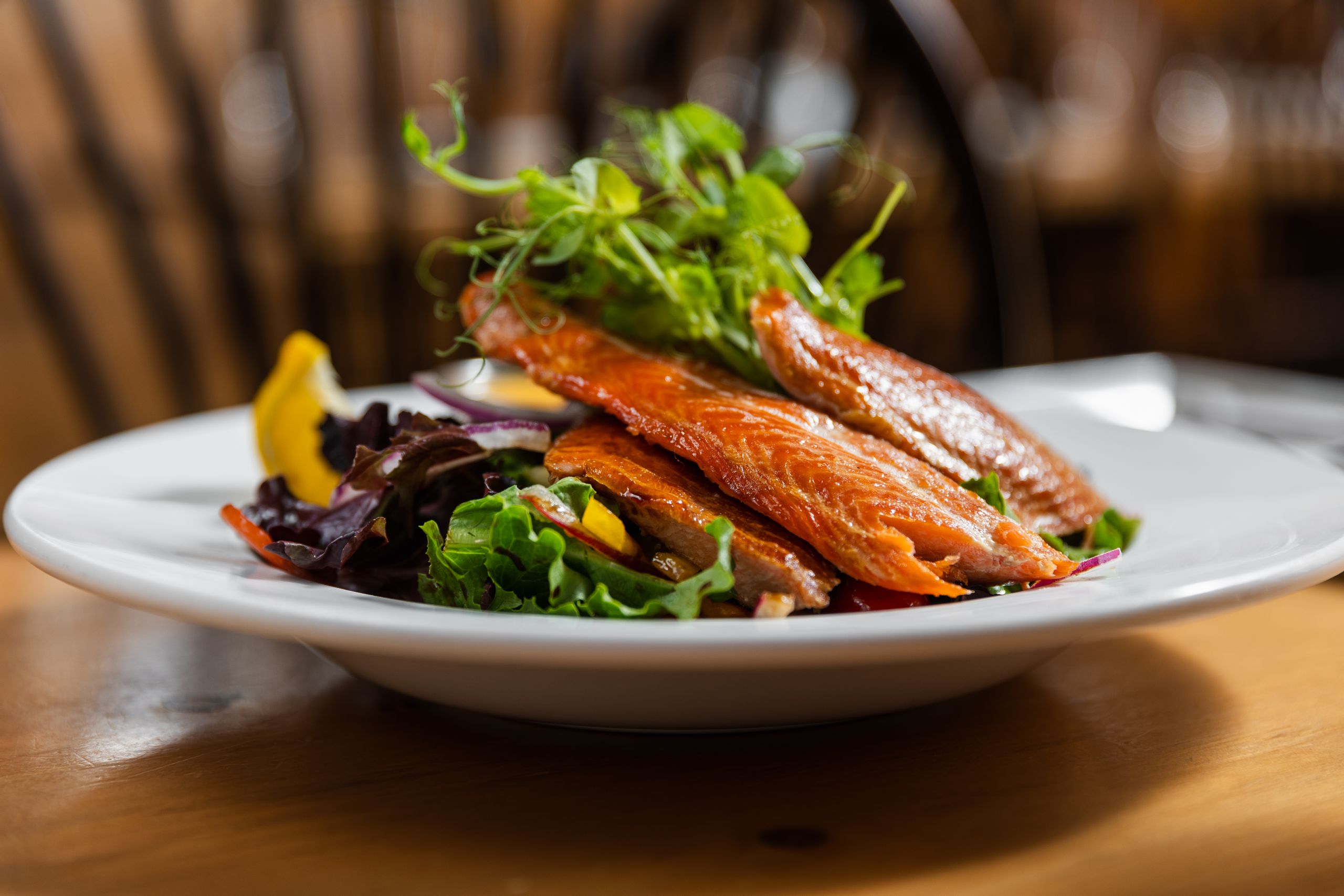
Poutine and smoked meat are must-tries. Trout is also a highlight. You can catch it in one of Québec’s outfitter lodges, cook it at your cabin, or enjoy it at a restaurant. Lobster is also worth trying, especially from regions like Gaspésie and the Magdalen Islands. Game meat is often featured in inns and hotels.
Where can you eat local food in Québec?
Avoid large restaurant chains, which rarely offer a truly local experience. Look at menus in advance. Restaurants that focus on local cuisine usually highlight seasonal ingredients, regions, and producers.
Lac-Saint-Jean tourtière vs classic tourtière: what is the difference?
The Lac-Saint-Jean version is a hearty, slow-cooked dish with cubed meats and potatoes, closer to a stew baked in a crust. The classic version is more like a traditional meat pie made with ground meat.
What are cheese curds in Québec?
Cheese curds are very fresh cheddar pieces. When they are fresh, they have a firm, elastic texture and make the famous squeaky sound when you bite into them. They are essential to a proper poutine.
Which Québec food products should you bring back home?
Maple syrup is the most iconic and easiest option, along with maple sugar, candies, and maple butter. Jams and jellies made from boreal berries are also great choices, as well as boreal spices, which are hard to find elsewhere. To avoid issues, it is best to choose sealed or dry products, as some animal-based products may be restricted depending on customs regulations